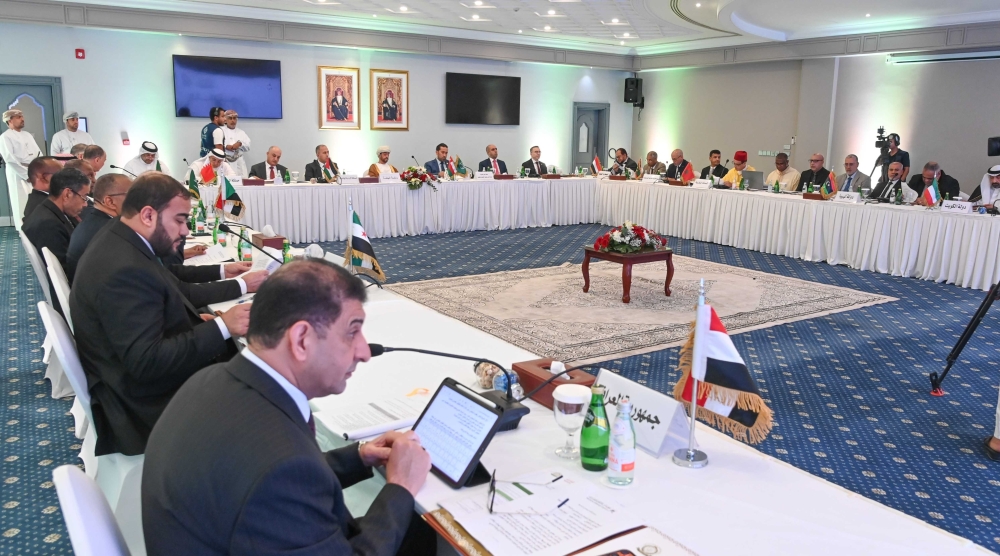





SALALAH: The 30th meeting of the Heads of Judicial Inspection Bodies and Authorities in Arab States was held on Monday in Dhofar Governorate with the participation of 14 countries. The meeting will continue for two days.
The Supreme Judicial Council of the Sultanate of Oman presented a working paper entitled "Artificial Intelligence and Judicial Inspection: Towards an Arab Index for the Quality of Judicial Rulings". It addressed the application of modern technologies in analysing rulings and deriving quantitative and qualitative indicators that measure legal reasoning, the consistency of judicial jurisprudence and the speed of adjudicating cases. It affirmed that artificial intelligence is a supporting tool for the judge and the inspector, not a substitute for human discretion.
The participating Arab states, including Iraq, Lebanon, Syria, Algeria and Kuwait, presented working papers addressing the transition from traditional oversight to preventive oversight, the evaluation of court performance, and the prospects for employing smart technologies in legal research and data processing. They also discussed challenges related to algorithmic bias and the protection and confidentiality of judicial files.
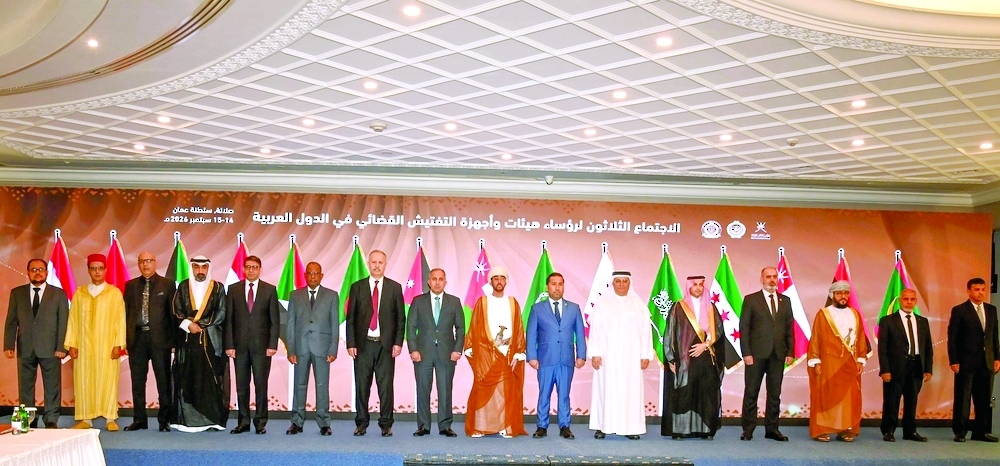
The meeting also discussed a proposal to prepare a unified Arab model for assessing the quality of rulings, and to develop a guiding manual that considers the nature of Arab judicial systems. It also approved the criteria and controls for granting the Arab Award for Judicial Inspection Works.
The 30th meeting of the Heads of Judicial Inspection Bodies and Authorities in Arab States concluded with a number of recommendations. The most prominent include adopting the draft Arab Award for Judicial Inspection Works, unifying procedural inspection standards among Arab states, and developing judicial inspection methodologies by moving from traditional oversight to oversight based on performance and quality indicators. They also include enhancing the independence of judicial inspection bodies and developing oversight and evaluation tools and mechanisms to strengthen transparency, raise performance efficiency and entrench the principles of integrity and justice.
The meeting further recommended adopting a balanced system for evaluating judges' performance, developing objective and measurable criteria, and linking evaluation results to continuous training and qualification plans. It also recommended adopting artificial intelligence as an assisting tool in analysing the quality of judicial rulings and inspection work, while establishing legislative and ethical frameworks regulating its use.
The participants adopted a number of scientific themes for the thirty-first meeting in 2027. These include total quality management in judicial facilities, balancing judicial independence with judicial performance evaluation, smart justice, and preparing a unified Arab framework for indicators of the quality of rulings and judicial inspection. — ONA
Oman Observer is now on the WhatsApp channel. Click here